How Can You Participate In World Book Day

World Book Day, also known as World Book and Copyright Day, is an annual celebration organized by UNESCO to promote the joys of reading, publishing, and copyright. It takes place on April 23rd each year, a date chosen for its symbolic significance in world literature as it marks the death anniversary of several prominent authors, including William Shakespeare and Miguel de Cervantes.

Participating in World Book Day is a wonderful way to celebrate the joy of reading. Here are some ways you can get involved:

Redeem Book Tokens: If you have received a World Book Day book token, you can redeem it at participating retailers for a free World Book Day book or get a discount on other books during the redemption period.

Attend Events: Check out local libraries, bookstores, and schools for special World Book Day events, which may include readings, author signings, and book-themed activities.

Dress Up: Many schools and communities host costume events where participants dress up as their favorite book characters. It’s a fun way to engage with literature and share your love for a particular story.

Share a Story: UNESCO encourages sharing stories and reading aloud to children for at least 10 minutes every day to foster a love for reading.

Gift a Book: Consider gifting a book to someone, especially children, to encourage reading. It’s a great way to spread the love for books.

Join Online: Participate in online discussions, book clubs, and social media events centered around World Book Day. Share your reading experiences and recommendations with others.

Support Local Bookshops: Visit your local independent bookseller to explore new titles and support the community. Many bookshops participate in World Book Day by hosting events and offering special deals.

Remember, World Book Day is about celebrating books and reading in all forms, so any way you choose to participate will contribute to the global appreciation of literature!

Happy World Book Day 🙂

Paperbacks!

A Landmark Piece of American Literature

“Uncle Tom’s Cabin,” written by Harriet Beecher Stowe in 1852, has been a subject of controversy for its portrayal of African Americans and the institution of slavery. While the novel played a significant role in the anti-slavery movement, it has also been criticized for perpetuating racial stereotypes.

The novel has been scrutinized for creating stereotypes that continue to affect Black Americans. Stowe’s character, Uncle Tom, is seen by some as a symbol of passivity and subservience to white people, which contrasts with her intention of portraying him as a figure of faith and resilience

At the time of its publication, the novel was criticized by some whites who thought Stowe’s portrayal of black characters was too positive, and later by black critics who believed these characters were oversimplified and stereotypical.

The controversy surrounding “Uncle Tom’s Cabin” reflects the evolving understanding of racial representation and the impact of literature on societal views. It remains a significant work for its historical context and its role in shaping American attitudes towards slavery and race

Harriet Beecher Stowe’s research for “Uncle Tom’s Cabin” was extensive and multifaceted. She drew from her personal experiences, the stories of formerly enslaved people, and anti-slavery literature.

Stowe was born into a family that held strong abolitionist beliefs. Her experiences and the discussions she had within her community provided a foundation for her understanding of slavery.

Stowe conducted interviews with people who had escaped slavery, gathering firsthand accounts of their experiences.

She used existing anti-slavery literature as part of her research. One significant work she drew from was “American Slavery as It Is: Testimony of a Thousand Witnesses,” co-authored by Theodore Dwight Weld and the Grimké sisters.

Through her novel, Stowe aimed to vividly dramatize the experience of slavery and influence the attitudes of her readers towards African Americans and the institution of slavery itself. Her work contributed significantly to the abolitionist movement and remains a landmark piece of American literature.

Santiago & Manolin

The Moon Affects Her As It Does A Woman!

You can never be satisfied with the emotions that Hemingway creates. I remember mentioning to a friend that reading his books are like having an interaction with a very close friend of mine, I don’t even realize that am reading, it’s like him talking to me. Hemingway is my favorite and other writer who comes closer is JD Salinger.

Coming back to this book, in the surface (like sea) we get to read a simple plot which includes the following characters, but when you finish this book and  as the thoughts starts pouring in you get to see the Hidden treasures.  

The Characters

Santiago               The old fishermen whom, the community had taken every chances to put down. Even though he was a skilled fisherman in his prime, now with this age, he was considered to be lost the skills and unlucky. Unlucky because he had gone 84 days without a catch.

Manolin               The boy, who learned the skill from Santiago. This kid got a huge respect for Santiago and he believed in the old man. The boy also helps and provide for the old man.

Marlin                   is a kind of fish, with whom the old man spends several days at the sea to capture it.

The Story

Our old man goes into sea, a solo voyage, to prove his community of fishermen that he is still capable to make a big catch and his skills are as upto date as it was in his prime days. In this endeavor He succeeds or not?

Before I get into the treasure hidden beneath the sea, I must record the connection Hemingway constructs between the Old man and the boy, is something that will stay with me forever, it provide me a greater venue to present examples about some relationships. Same was the case with the character named Catherine from the book ‘A Farewell To Arms’, even though I read this book years back, I still remember how strong a character she was.

Now about the treasures we can find from this subtle story, let us name it under current themes are the followings.

Pain / Suffering

Nothing comes to us easily (most cases). For a fisherman’s worthwhile catch comes from painful physical and mental injuries. Enduring pain that is what it meant to be a fisherman. The old man’s hands are marred with scars, which show us a lifelong struggle with the opponents at the sea.  

Samsara

Hemingway, with his narrative audacity throws the thoughts that sea is cruel and beautiful.  It gives life and takes it away. Isn’t the case of our lives with ups and downs? The sharks devours marlins, the man catches fish.

Pride & Respect

The old man is pride of his skills and wants recognition for them (each one of us want it right?, so don’t just like it, do comment your thoughts too). On his solo voyage he wished that the boy was with him not only to dispel loneliness but to show the boy that what kind of a man he is and to witness the greatest catch of his life.

Inspirational

I felt it like one of the inspiring story that possibly we could have come across. When all other hopes are set comes the book to give you that boost to kick start and keep going, this one is truly an inspiring read.  It is the story of perseverance. Instead defying his streak of bad luck, the old man keeps going out to fish, trying even harder than the previous time. No matter what Santiago is not defeated nor is his spirit broken. Isn’t the shot we all needed to make believe, fall six times rise seven? Indeed it is, you will also connect once you read this story.

Like Jesus bearing his cross, our Old man will carry his mast to and from his skiff day in & out doing what a fisherman are meant to, to set sail and catch fish.

Happy reading!

Josh

Publishing Director

Museum of Innocence – A Study

Orhan Pamuk’s novel The Museum of Innocence (MOI), deciphers the complex Turkish
identity of individual and society which is dwelling between the modernity and values
of Eastern and Western culture. In the novel, Pamuk has brought several narrative layers that depict the postcolonial changes in Istanbul throughout the 1970s to 2000s (Allmer,163). It reflects upon identity issues, turbulent Turkish history, and the influence of European culture (Pang, 2). The study aims to examine the possible meanings of the three major perspectives: heterotopia, Kemal’s infidelity, and the materialistic culture reflected in the novel. Pamuk’s novel ends up forming a curated museum which is a heterotopic place juxtaposing the real and imaginary world. The novel also raises concerns about the portrayal of gender issues (Khamitova, 16). The protagonist, Kemal belongs to a wealthy family from the elite group of the Istanbul community. Kemal narrates about his obsessive and lost love, and how it changed the course of his life along with a detailed description of Istanbul’s life (Yuncu et al. 241). The novel models the narrator using storytelling, his memories, and the use of objects for the description of personal and collective memory (Khamitova, 17). The novel consists of Kemal’s intense monologues and the frantic act of collecting objects (Pang, 3). This novel is a unique work with which Pamuk created a literary and architectural space to coherent rationale for the theme. The literary space in the novel could integrate the theory of Lefebvre’s special triad (Yuncu et al. 244). Thus, the museum acts as a fine exemplar of the explicit architectural correlation with the novel setting (Yuncu et al. 250).

Heteropia


Michel Foucault’s concept of heterotopia can be used as a tool to understand the
heterotopic quality of Pamuk’s novel and to understand how these spaces create
challenges or resistance in the novel (Ansin, 1). It helps in identifying the features of the selected spaces within the novel. The love story of Kemal and Füsun occurs in the ambient milieu of Istanbul where the traditional values and Westernization oscillate towards the end of the 20th century (Ansin, 1). The novel involves the subjective experience of passionate love and obsession of Kemal the transformative power of the spaces over him with time. With the progress of recollecting his memory, the narrator is making the reader visualize a museum with curated things that reverberate with the backdrop of the story. The tragic death of Füsun devastates Kemal and he tries to find solace in the things he collected over the years (Merwa, 18). The museum is curated with the various belongings of Füsun which act as Kemal’s most personal spaces where he takes shelter. Thus, the Museum of Innocence acts as a space of hope for Kemal, and this literary expression of Foucault’s heterotopia makes the time constant in the museum (Shamla, 28). This space can be witnessed for Kemal’s love story and a reference for Istanbul’s political, cultural, and social events during the time (Sönmez, 1018). Pamuk’s attempt to narrate Kemal’s love story caused the genesis of a novel for the Turkish literary world but contributed to a museum for the global audience. Since the story of
the novel and the museum are the same, Pamuk’s Museum of Innocence acts as a
heterotopic world.

Kemal’s infidelity


The novel ends with Kemal telling the writer Orhan, ‘Let everyone know, I lived a very happy life’ (MOI, 532). This statement makes the reader raise a question to Kemal, ‘Did Füsun ever have a happy life?’ Kemal is engaged to Sibel before meeting Füsun and they represent educated, Western-influenced wealthy people belonging to bourgeois Istanbul. Füsun represents a financially backward girl who lives in a populated dark alleyway which is the less modernized side of Istanbul. On the peripheral layer, MOI talks about Kemal’s memory, passion, love, emotional attachment, and obsession towards Füsun (Dakhil and Zhang, 132). The novel begins with Kemal’s detailing of his sexual encounter with Füsun, which keeps on repeating over the time frame. Kemal’s passion is ruled by his libido and gets stirred by Füsun’s physical attractiveness (Dimitria, 68) and sex outside marriage is still a stigma in the society. Kemal commits emotional and sexual infidelity with Füsun (Rahayu and Khoiri, 1), and with the progress of the novel Kemal ends his relationship with Sibel and seeks Füsun’s reconciliation. MOI is the best example where Pamuk diligently talks about the issues of feminist existentialism such as patriarchy, freedom, objectification, suppression, equal rights, sexual harassment, prostitution, and suicide (Dakhil and Zhang, 132). Füsun expects Kemal to be part of her life but she gets irrevocable pain when he decides to live with Sibel maintaining his social status. Their relationship was more on personal interests and more precisely on Kemal’s sexual satisfaction (Rahayu and Khoiri, 2; Dimitria, 72) which instilled anguish and emotional misery in Füsun. The theory of love
is a concept developed by the existential psychologist Rollo May and Pamuk uses this
love in this novel. Kemal’s love can be defined as the most influential factor in his
infidelity (Rahayu and Khoiri, 5). This novel also urges the reader to instigate the reader to interpret the text concerning the theory of feminism and how the supremacy of a male-dominated society relegated women to mere objects (Dakhil and Zhang, 135).
Pamuk has portrayed Füsun as an example of the victimization of Turkish women in
that era. Through the novel, Füsun undergoes sexual objectification and the sexiest
oppression from the men in her life. In the name of helping Füsun with mathematics,
Kemal had masked her ulterior motives of using her for his sexual fantasies (Dakhil and Zhang, 137). This leaves no room for the care, love, sincerity, and emotional security deserved by Füsun. There exists mutual objectification between Füsun and Feridun. Kemal’s sexual oppression causes him to keep Füsun away from all film opportunities. Feridun took away her opportunity to become a star and this caused pain, frustration, and resentment in Füsun (Dakhil and Zhang, 139). Füsun faced extreme suppression from the patriarchal society in the form of helplessness, vulnerability, unemployment, depression and which caused her suspected death from suicide. The issues faced by Füsun are common to both feminism and existentialism (Dakhil and Zhang, 140). Pamuk intentionally throws questions at the readers to think about the equality and rights of women in Turkish society (MOI, 410).

Pamuk-Kemal collector’s model


According to Pamuk, the novel and the museum are two representations of the same
story (Pamuk, 2008). Kemal has collected most of Füsun’s objects such as earrings,
yellow shoes, a tricycle, ashtrays, cigarette butts, quince grater, etc. over the years between 1975 and 1983 to indemnify her for not being in his life. Pamuk makes the narrator feel proud of his obsessive collection as an expression of his love rather than letting him feel culpability. His love for Füsun is cataloged with several notional objects curated in the museum. These belongings of Füsun are detailed in the bourgeois Istanbul grounds (Allmer, 166). Finally, Kemal makes an exhaustive catalogue of Füsun’s possessions and this in reality leads Pamuk’s novel to be shaped into an architectural project, a museum. Pamuk opened the architectural discourse of The Museum of Innocence at Çukurcuma, Istanbul in 2010. Thus, bringing life to his creative illusion of Kemal’s love. This also reveals Pamuk’s inquisitive approach in carefully considering the novel’s factual reality narrated by Kemal and bringing the encyclopedic quality of the novel into the museum. Beyond the obsession of Kemal over Füsun, this depicts Pamuk’s interest in collecting objects and Pamuk’s model collector shows similitude with the German philosopher Walter Benjamin’s approach to collecting objects (Allmer, 167). Both Pamuk and Benjamin resonate various emotions with respective objects and aid in proving Pamuk’s artistry through the museum. Similar to Füsun’s house, Merhamet apartment symbolizes the collector’s nature of Kemal’s mother and acts as a milieu of materialism. Pamuk’s curated museum practices the Picture Theory of William Mitchell in expressing the images in words (ekphrasis) (Allmer, 169). In MOI, Pamuk explains the theory by providing verbal representation for his images through writing the novel, the reader develops their visual images while reading the novel and curated museum from the textual novel for the reader. The similarity of visual signs in the museum and their contextual elucidation in the museum is termed as anchorage by Barthes in his Rhetoric of the Image (Barthes, 1977 and Ogut, 4). The artifacts act as agency of objects with Kemal’s self-contained memories. These artifacts not only bring in the materialistic culture but also introduce Lyotard’s concepts of ‘Figure and Discourse’ (Ogut, 10). This museum is a representation of Kemal’s nostalgia, his yearning for his past: his childhood memories of his community and country (Yuncu etal. 242)

End notes.

On the first read, the novel seems to talk about the love, passion, resentment, memory, and obsession of Kemal for his lover. But between the textual discourse, Pamuk has written the finest novel which evokes the reader to think about various issues prevalent in the male-dominated society and how it impacts the Turkish women The characters and the events speak for the sensitive socio-political issues and critically question its prevalence. Panuk gives the novelized realism a heterotopic architectural facet. Sexual objectification and suppression are major issues explained through Füsun’s feminist
existential crisis. Pamuk questions the female subordination to the patriarchal authority endemic in Turkish society. Pamuk has explored the possibility of curating Kemal’s love and obsession for Füsun and her materials. With Kemal and Füsun, Pamuk created a literary space as well as an architectural space for his readers. These artifacts remain untouched by the ever-growing modernization occurring in Istanbul and continue to tell their stories to every visitor. The building of the museum diminishes the boundaries between literature and architecture thereby novel getting spatialized and the space gets textualized.

Elaine

Sub-Editor

My Discovery of Zola

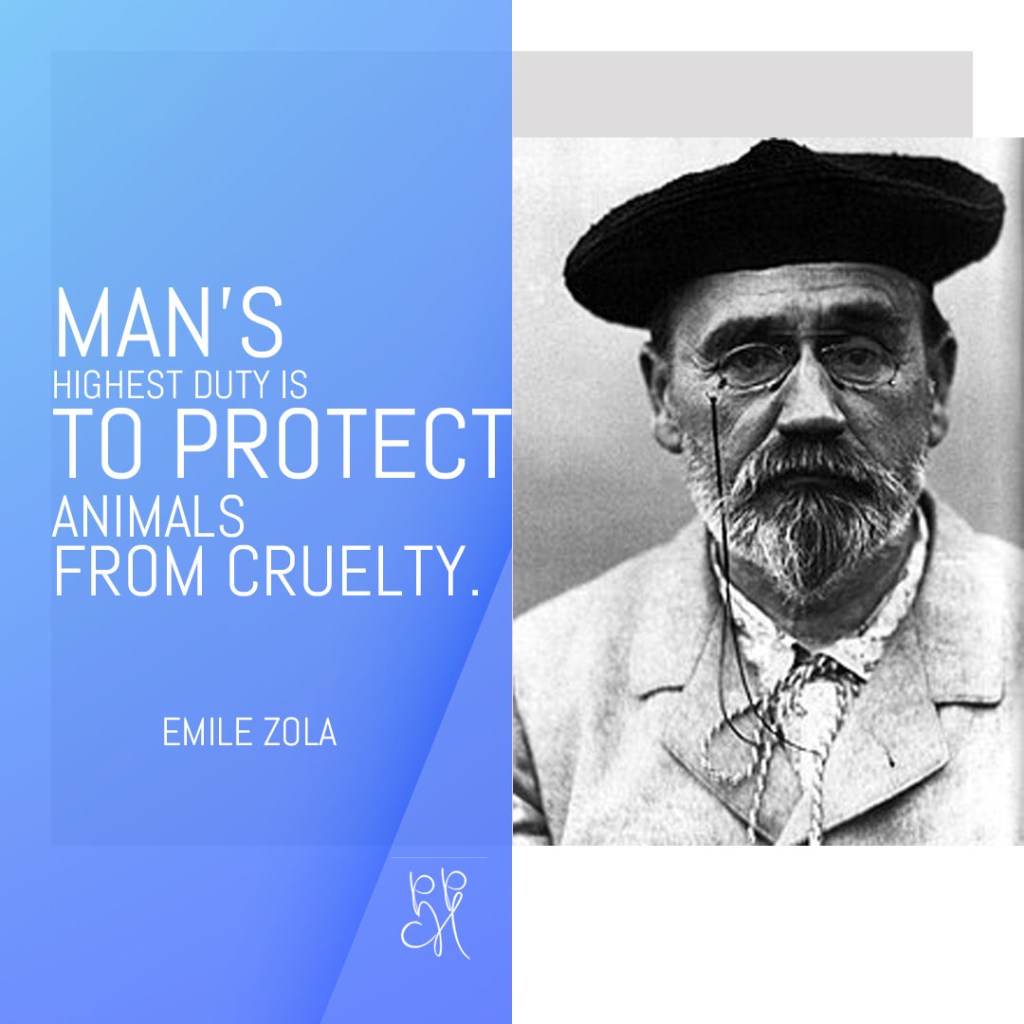
Realism to Naturalism, my search unearthed the master of Naturalism, Emile Zola!

Literary realism is a movement that depicts reality by portraying mundane everyday experiences as they are in real life. It primarily deals with the life course of middle and lower classes. The shift happened during the ninetieth century, which took an alternative narrative from the usual one, which was about exotic and poetic romanticism.

The roots of literary realism lie in France. The two prominent figures were Honore de Balzacand Gustave Flaubert, who adopted and gave wings to realist narration. The change occurred because then the works of Romanticism were thought to be exotic. Even though they celebrated the uniqueness and impermanence of every human life by living their lives through emotional experiences, it lost the connection with real world.

Once realism started gaining momentum, that was the exact time when George Eliot (Mary Ann Evans) published ‘Middle March’, a study of provincial life in 1871.

There are about 6 types of Literary Realism,

  1. Magical Realism: One Hundred Year of Solitude by Gabriel García Márquez (1967)
  2. Social Realism: Les Miserables (1862)
  3. Kitchen Sink Realism: Room At The Top (1957)
  4. Socialist Realism: something created and adopted by the communists.
  5. Naturalism
  6. Psychological Realism: Crime and Punishment by Fyodor Dostoyvesky (1866)

I have explored all other kinds of realism except Naturalism. So this new opportunity pushed my curiosity to widen the horizons to learn more about and get acquainted with Naturalism.

Naturalism is considered to be the extreme form of realism influenced by Charles Darwin’s Theory of Evolution, was said to be founded by Emila Zola, the French writer. Naturalism explores and investigates all social and environmental phenomena in the belief that nothing exists beyond the natural world. Here super naturals and spiritual experiences are negated and the focus shifts on to that explanation that comes from the law of the nature.

Then I realized that I have already read some works that can be categorically called as Naturalism. Then I wasn’t aware of the literary branch I was exploring through my readings. Till then I was observed into English and Russian literature marvels, this discovery of Naturalism opened an avenue, a secret door to French Literature as well.

I decided to begin with the works of the father of Naturalism, Emila Zola. I was not at all disappointed. I bought The Entire collection of Emila Zola on my Kindle, and I was excited to explore the new world of literature with the fascination of a child. I began with his short stories and it gave me the satisfaction of a piping hot meal, or like indulging a perfectly baked cake, delicious!

Almost through the short story collection, now I am eager to read his novel, and it is kind of cool off period for me to make a decision on what am I going to pick? Should I begin with his early novels or should I jump into the literary series consisting of 20 books called ‘Rougon-Macquart.

I guess I will be picking the 20-book series after completing his novel called ‘Therese Raquin’, the novel which undoubtedly put him in the map of French Literature.

And here we come, my discovery of Emila Zola and the journey into the best of works on Naturalism. It all started with reading an article about Realism, through which I detected naturalism on my radar. It is an immense discovery of an author who pioneered this literary movement. Like I always believed, we don’t pick books, they pick us, that too only when we are ready to accept them. My moment with Naturalism and Emila Zola had just begun!